How a call from here usually goes
Caller: our printer has stopped.
Us: what does it say on the screen, word for word.
Caller: something about a tray, but there is paper in it.
That one exchange explains half our work in this belt. The tray message is real. The paper is in there but pushed too far to one side, or fanned wrong, or a different size from what the tray is set to, and the sensor reads the tray as empty. A minute of questions fixes it, and nobody has to be booked.
The other half is the stuff that does need a technician, and for that the questions are about location, access and what changed. Who is on site, where is the machine, what happened just before. We write the answers into the booking so the technician has them.

Trade units around Tomewin Street
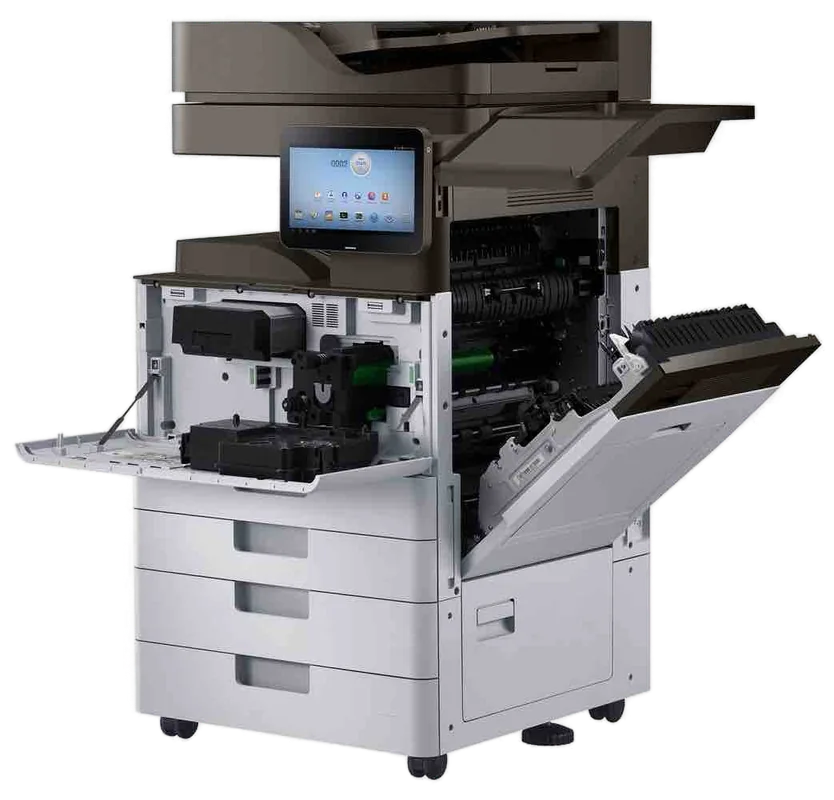
Currumbin has a pocket of light industry, and Tomewin Street is the name most people know. Builders' offices, workshops, suppliers, a few small manufacturers and the businesses that fix and fit what the coast is built from. The office end of each unit is small. A desk, a laptop, a laser printer on a filing cabinet, a copier if the business is large enough.
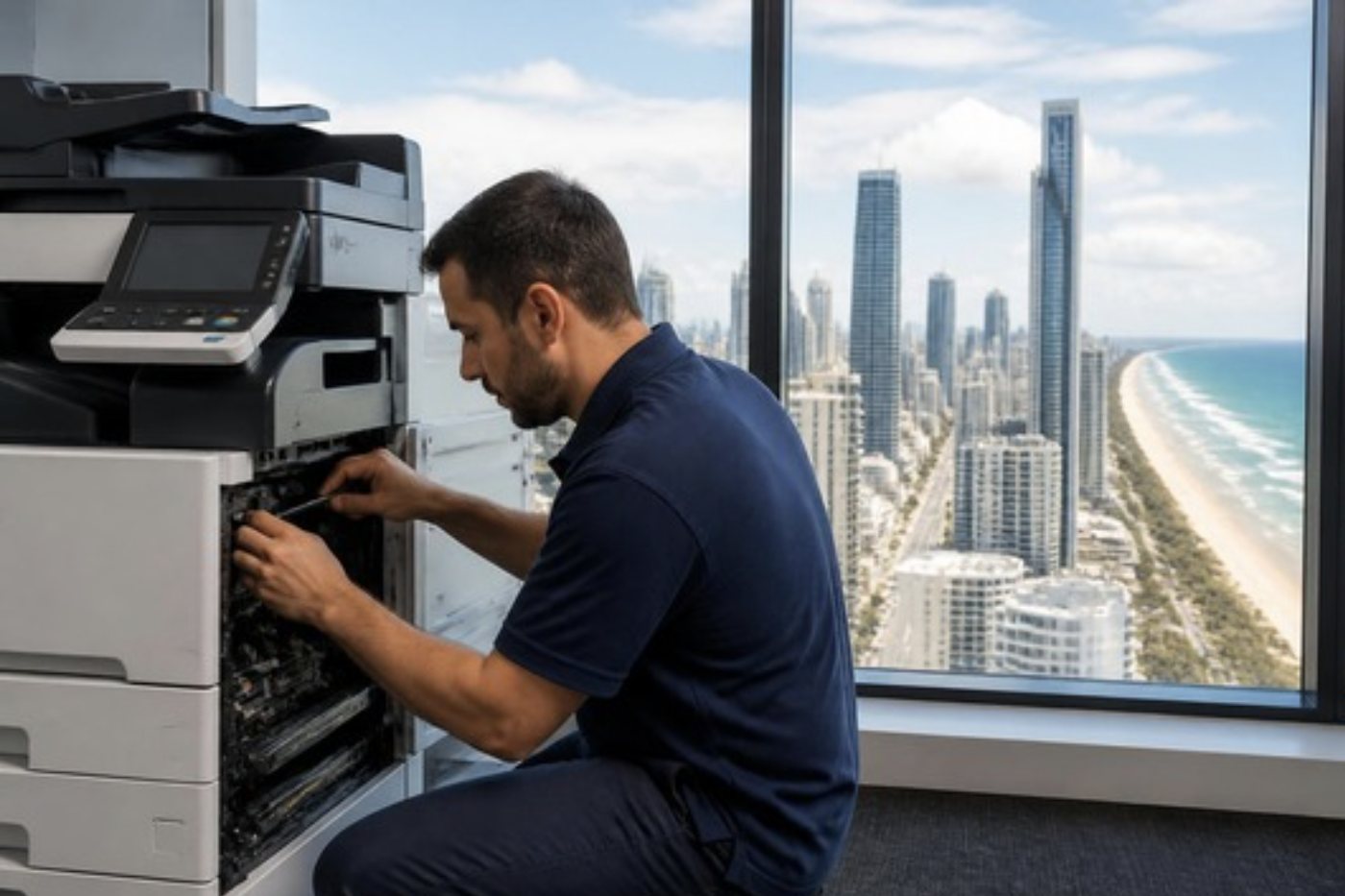
Printing is job sheets, quotes, invoices, delivery notes and the occasional plan. Dust is the enemy. Plasterboard dust and sawdust are fine and abrasive, and a laser printer in a workshop office collects them on every fan and roller. We open the machine, vacuum what we can, replace what is worn and tell the owner where to put it next time.
If a unit is locked when we arrive, nobody wins. Tell us who has the key.
Schools, childcare and community offices
Elanora and Currumbin Waters have state schools, childcare and early learning centres, a church or two and community halls. Each of these has an office where the machine is used by a handful of people with very different skills.
Childcare is a good example. A centre prints enrolment forms, medication consent forms, incident reports and a great deal of colour display material. Forms with personal details are filed and scanned, and the scanner is as important as the printer. A centre director is rarely a computer person and rarely has time for a long phone call.
We keep it short. If the machine needs a visit, we agree a time that suits the centre's day, usually when the children are asleep or at the start of the afternoon, and we leave the room as we found it.
Up the Currumbin Valley
The valley road winds into the hills, past the rock pool and an ecovillage, and the offices along it are a different world. Studios, small farms, bush retreats, tutors and consultants working from a spare room with a view of a gum tree. Machines there are compact and often run off a long power lead on a rural supply.
Power is one of the first questions. A laser printer on an extension lead shared with a fridge and a pump may trip the circuit as the fuser heats. A plain wall point and a surge protector fix more valley faults than any part. Phone service can drop in the gullies, so give us a second number.
Three machines, three stories
A few real kinds of call, described without names.
- A trade unit copier that prints grey streaks. The glass is coated with fine dust, and the feeder strip has a groove worn into it.
- A childcare centre scanner that stopped saving to the shared folder. The staff password changed and the machine still holds the old one.
- A valley studio printer that works until the afternoon storm. A tripping circuit, not a failing printer.
Each took under an hour once the right question was asked.
Storms, power and the humid months
Summer storms arrive from the west in the afternoon, and the first sign is the lights dipping. A copier that is running at that moment can stop mid page with a code that will not clear. Switch it off at the wall, wait a few minutes, switch on. If the code returns, ring us.
Humidity affects paper as much as electronics. A ream stored in a garage or a damp store room curls and jams. Keep it in its wrapper, flat, off the floor. Replace it with a fresh ream before blaming the machine.
The usual brands
Kyocera copiers are common in the schools and trade offices, and Ricoh and Canon in clinics and larger firms. HP and Brother lasers do the bulk of the desktop work. We service all of them as an independent business, which means we do not have to steer you to a brand.
Machines on a lease with service included should have the agreement checked before you ring. If repair is up to you, we look at the machine and give a price on the phone.
Who comes, and what they bring
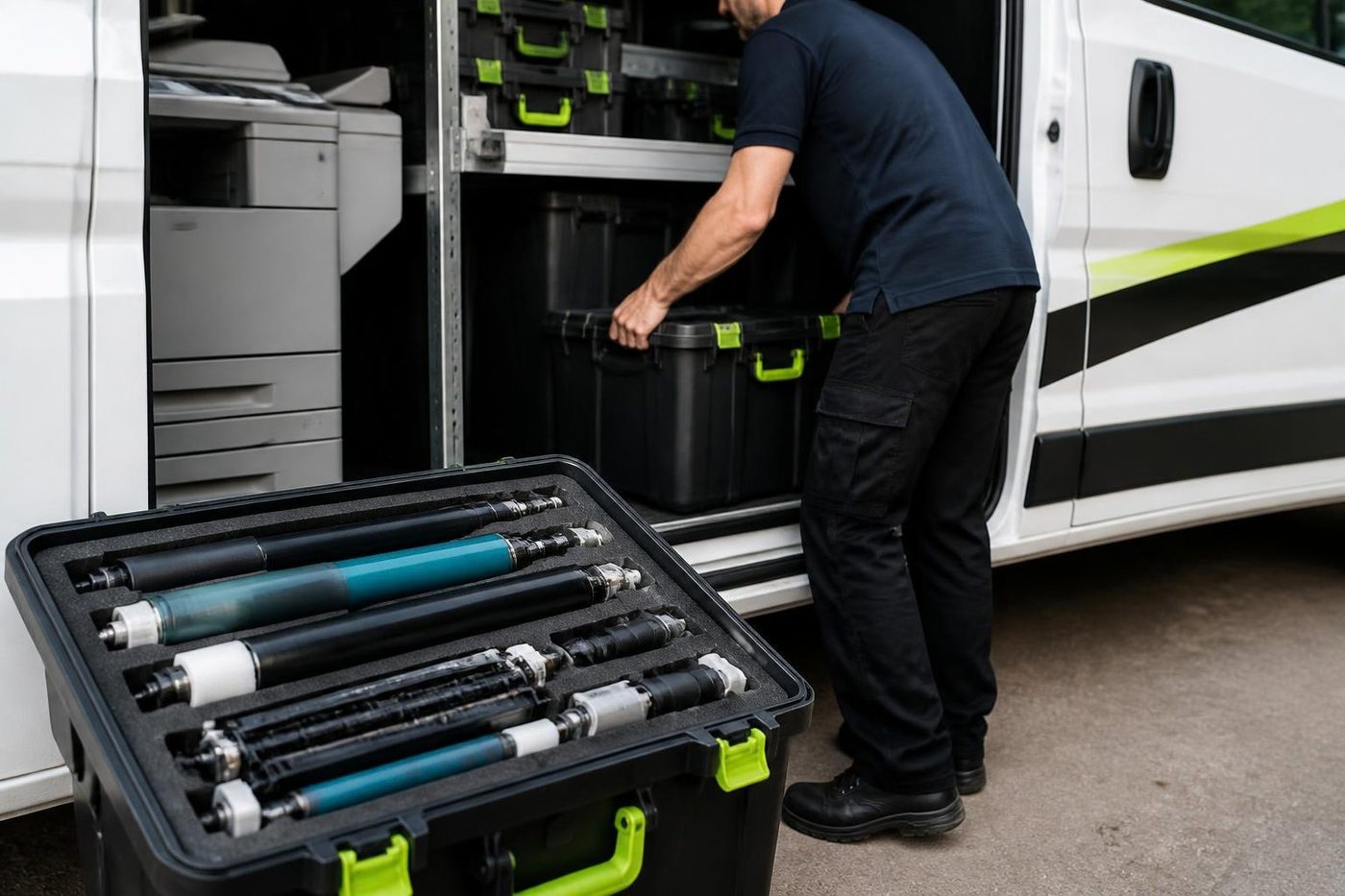
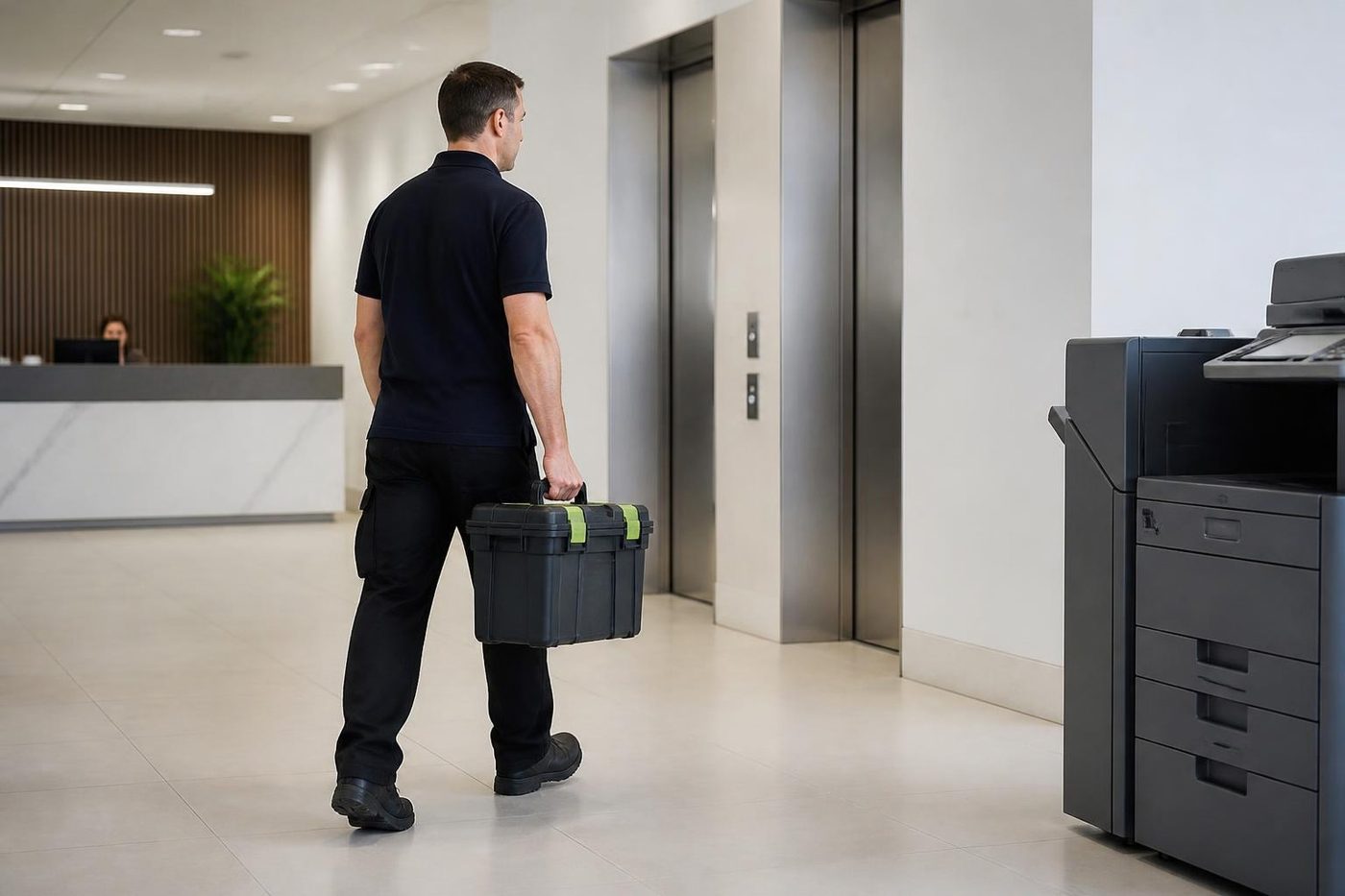
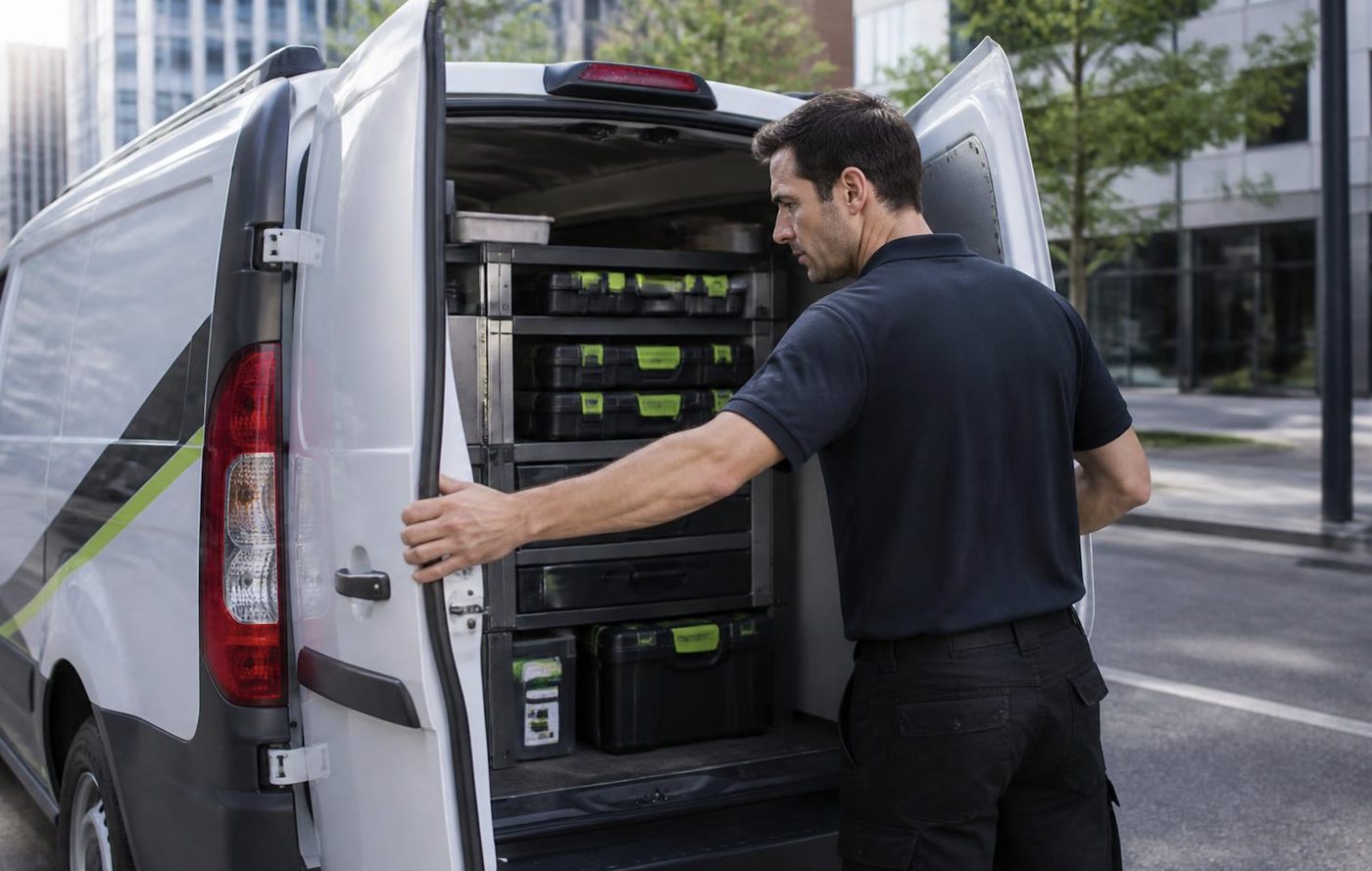
A trained, experienced and certified technician, with common spares on the van and a plan for the machine in front of them. 98% of repairs are fixed on the first visit. The work is warranted, and if the same fault returns, we fix it again at no charge.
Same day service is available in the southern belt. If the lines are busy, the call is logged and returned, so leave the street, the make and a number.
The scanner is half the machine
In a school or childcare office the scanner does as much work as the printer. Signed forms, enrolment documents, invoices from suppliers and certificates all end up as files, and the file has to land somewhere the right person can find it.
Faults split into two kinds. Mechanical ones: a feeder that pulls two sheets, a glass strip with a mark, a lid sensor that no longer tells the machine the lid is closed. And destination ones: the folder moved, the password changed, the network name changed over the weekend. The first needs a technician. The second often does not, and we would like to help you tell the difference.
One trick is worth passing on. Scan a blank sheet. If there is a line down it, it is the glass or the feeder strip. If the blank page is clean and the document is skewed, it is the feeder rollers. If it never arrives, it is the destination.
Keeping paper in order
Most of the jams we hear about from this belt are paper jams in the truest sense. A ream opened a month ago and left on a shelf by a window. A tray topped up with a different weight. Sheets stuck together because the stack was fanned wrongly or not at all. Labels loaded into a tray meant for plain paper.
A few habits help. Keep paper in its wrapper until it is used, store it flat, and load it with the grain direction matched to the tray. Do not top up a half empty tray with a different brand. If you must change stock, change it all.
We carry spare rollers, but we would rather you did not need them.
When it is a shed and not an office
Some of the machines in the trade units are not in offices at all. They sit in a corner of the workshop, behind a bench, in a lunch room that is also a store. Hot in summer, cold in winter, dusty all year.
A copier is built for a controlled room. In a shed it will run, but a few things change. Toner takes up moisture and clumps. The fuser works harder in a cold room as it heats. Paper picks up damp from a concrete slab. Moving the machine into the front office, or at least off the floor and clear of the roller door, adds years.
We will tell you honestly if the location is the problem. Sometimes the answer is a shelf, and sometimes a wall.
Sharing one machine between three tenants
Some of the trade units are subdivided and shared by two or three small firms, with one copier in a common room. Nobody owns it and everybody uses it. Faults go unreported because each person assumes someone else has rung.
We suggest naming one person as the contact for the machine, even if it is only a matter of who rings. We can leave a label on it with our number and the model details, so the next person who finds it stuck does not have to hunt for them.
Costs are the other thing. A shared machine that breaks leads to arguments over who pays. We give you a clear written description of what was done and why, which helps the discussion.
Transfer belts
A crease in the belt shows on every page
The transfer belt is thin, delicate and expensive, and it is the part a careless hand damages most easily. One crease from a clumsy lift, or a smear of skin oil, and every page carries the evidence.
If your colour copies show a faint stripe in one colour only, ring and describe it. Belts and drums leave different signatures, and the pattern usually tells us which one to bring.
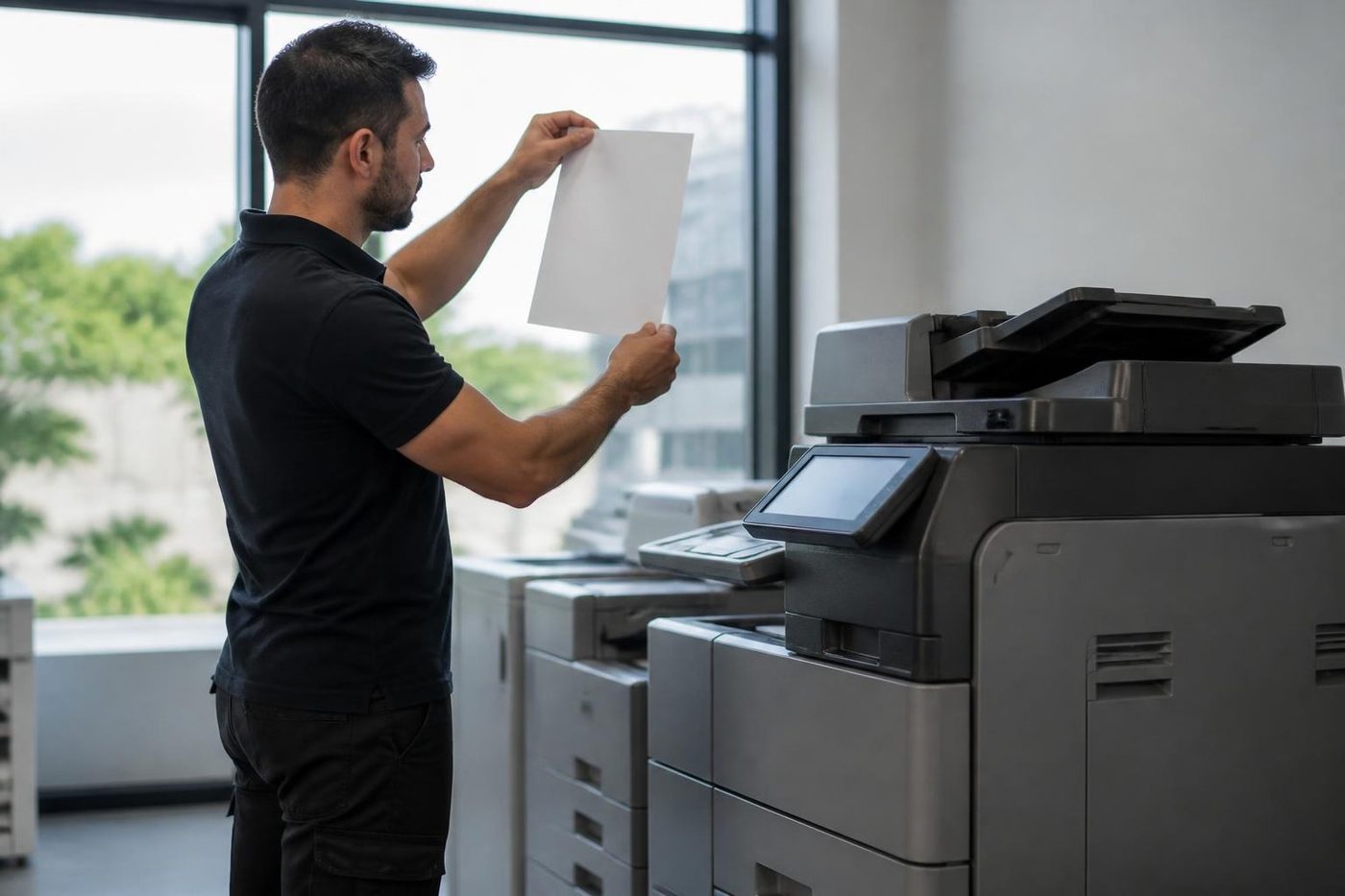
- Handled by the edges. No finger pressure on the working surface.
- Colour faults decoded. One stripe in one colour narrows the search.
- Bench kept clear. Nothing is laid on the belt, ever.
Keep reading
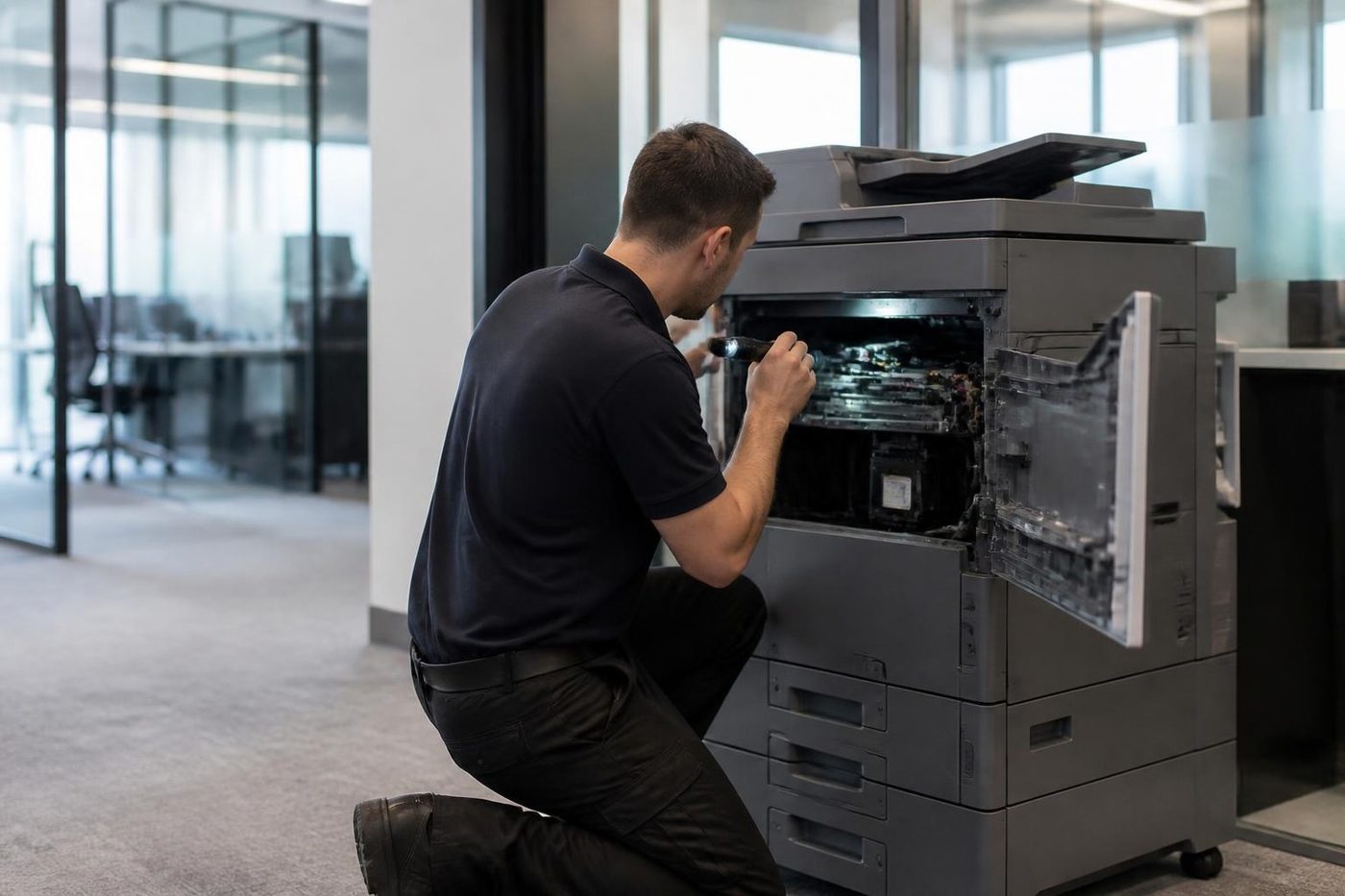 Photocopier repairsAny make of office copier, repaired where it stands.
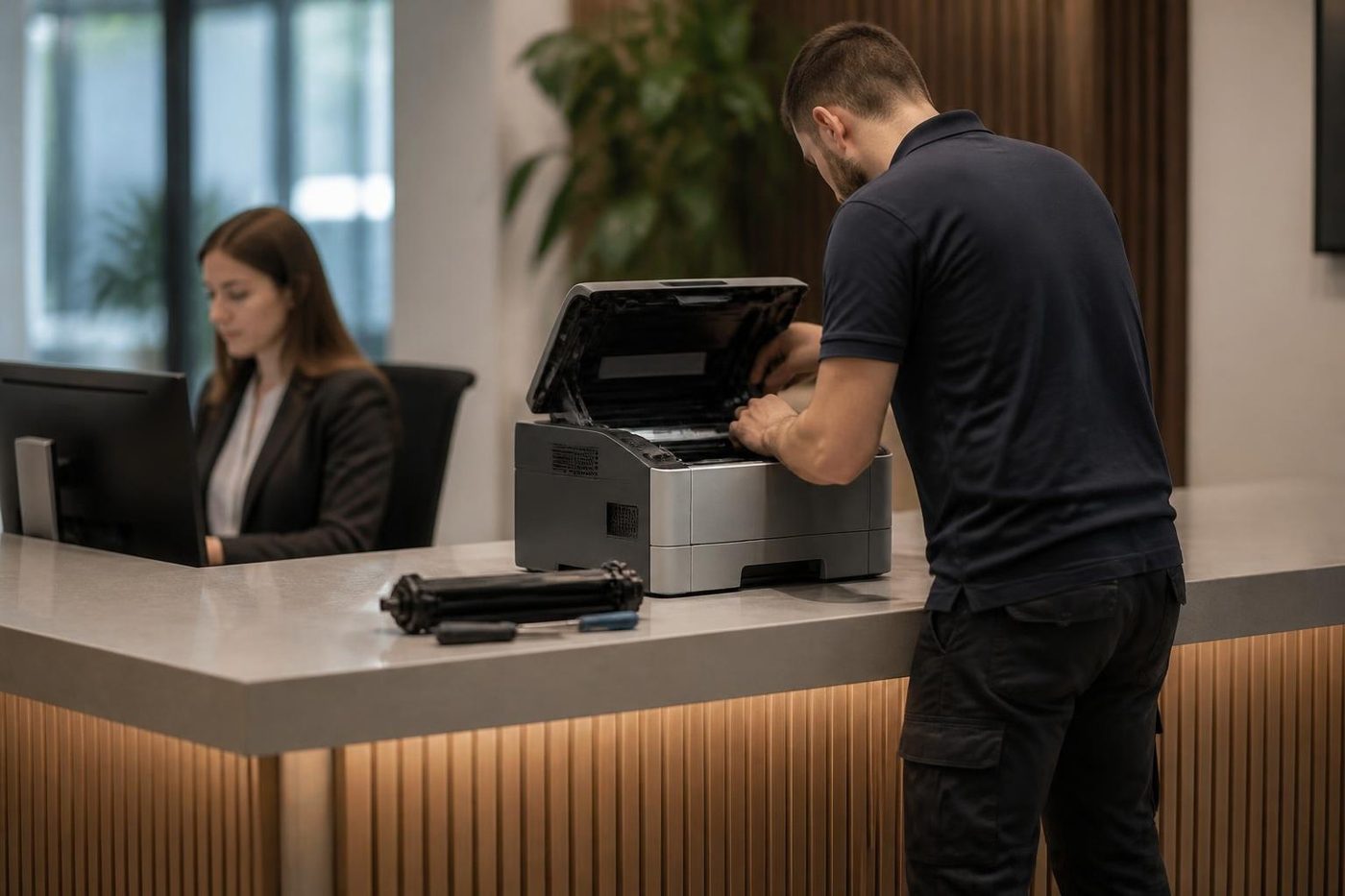 Commercial printer repairsWorkgroup lasers and fleets, repaired where they sit.
 Kyocera repairsTASKalfa copiers and ECOSYS printers, serviced on site.
 Ricoh repairsIM C, IM and MP series, plus Lanier and Savin badged machines.
 Currumbin, Palm Beach and TallebudgeraPalm Beach, Currumbin and Tallebudgera: school offices, small practices, visitor businesses and valley farms.
 Tugun, Bilinga and the AirportTugun, Bilinga, Kirra and the airport side: transport and hire depots, clinics, hospitality offices and the university campus.
 Miami and Mermaid WatersMiami, Mermaid Beach, Nobby Beach and Mermaid Waters: agents, clinics, studios, strata managers and hospitality offices.
Buy, sell and lease
Buy, sell and lease commercial copiers on the Gold Coast
We also sell new and refurbished commercial copiers and buy used ones. Same team, same technicians.
Around Southport, Burleigh and Robina
Common questions from Gold Coast offices
Our tray says empty but there is paper. What is wrong?
Often the paper is pushed too far to one side or the tray size setting is wrong. Straighten the stack, check the size guides and ring if it persists.
Do you service the trade units in Currumbin?
Yes, along with the offices around Currumbin Waters and Elanora.
Can you visit a childcare centre at a quiet time?
Yes. Tell us when the children rest and we plan the visit around it.
The scan to folder stopped after a password change. Why?
The machine still holds the old password. We can reset it on the phone or on site.
Do you go up the Currumbin Valley?
Yes. Give a mobile number, a second number if you have one, and a landmark.
Our machine trips the power in storms. Is it faulty?
Often the circuit or a surge is to blame. We ask about the power before booking a part.
Is dust really that bad for a printer?
Yes. Fine dust wears rollers and clogs fans. A clean on every visit adds months to a machine.
How is the price decided?
It is agreed on the phone before anyone is booked, and nothing is locked in.